
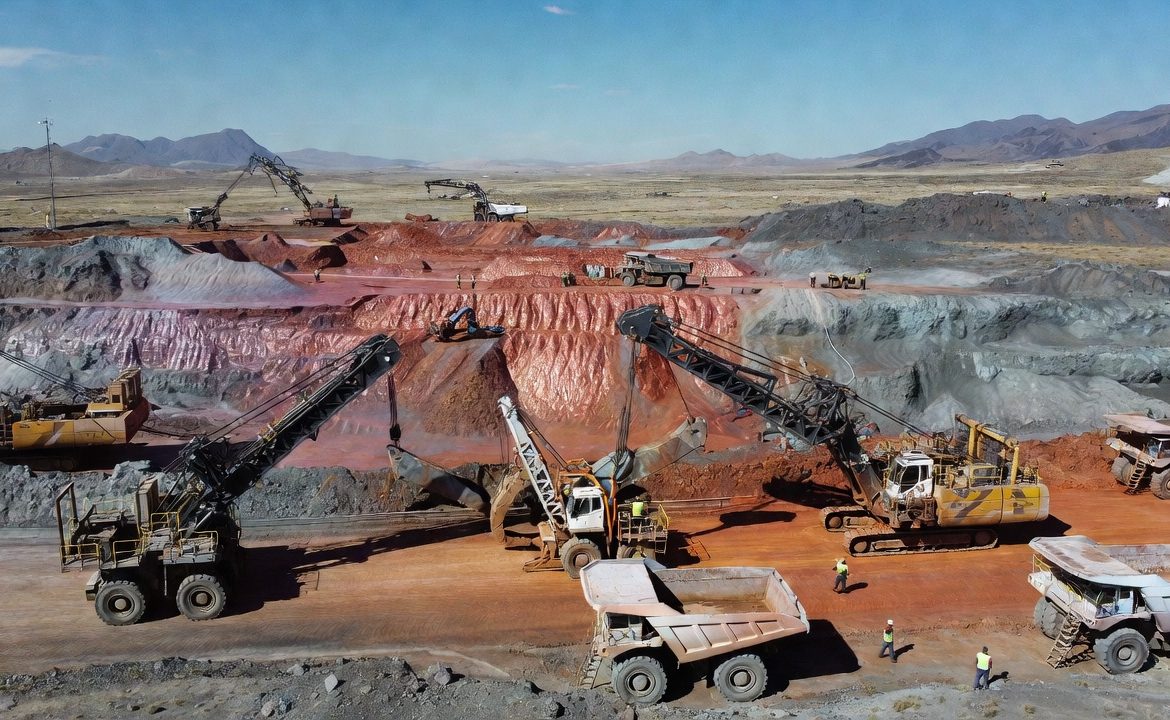
Chilean strike and vanishing LME stocks propel copper prices to record $13,000/ton
Copper prices reached a new record high on Monday, driven by intensifying concerns over supply.
This was primarily a result of a strike at a key Chilean mine, alongside low stock levels in London Metal Exchange-approved warehouses and projections for market deficits.
At the time of writing, the three-month copper contract on the London Metal Exchange was at $13,015 per ton, up 4%.
The contract had hit a record high of $13,025 per ton earlier in the day, thereby also breaching the $13,000-per-ton mark for the first time ever.
Mantoverde strike
The theme of copper shortages was underscored by the strike at Capstone Copper’s Mantoverde copper and gold mine in northern Chile, according to traders.
The Mantoverde mine is expected to produce between 29,000 and 32,000 metric tons of copper. While this is only a fraction of the global mined production forecast of around 24 million tons this year, it reinforces expectations of shortfalls.
Capstone Copper had announced earlier that Union Two at its Mantoverde copper mine in Chile would commence strike action starting January 2, affecting approximately 22% of the total workforce.
The company had announced that, despite the ongoing strike, the mine’s operations would be safely and gradually scaled back to approximately 30% of standard production.
Furthermore, the company had affirmed its commitment to continued negotiations in an effort to reach a resolution.
Global shortage for 2026?
According to a Reuters report, the Mantoverde mine is expected to produce 29,000 metric tons of copper, which is only a fraction of the world’s total mined production forecast of 24 million tons this year.
However, it still indicates that production could fall short of analysts’ expectations.
According to ING Group’s forecasts, the refined copper balance for 2026 shows a supply deficit of around 600,000 tons, which follows a deficit of around 200,000 tons last year.
A series of copper supply disruptions in 2025, most recently the force majeure declared by Freeport at its massive Grasberg mine in Indonesia, has led to a tighter market balance for both 2025 and 2026.
Grasberg, which is the world’s second-largest copper mine, accounts for approximately 4% of global copper production.
Additionally, a copper shortage exceeding 100,000 tons is anticipated globally in 2026.
Analysts at China Securities Co. attributed this projected shortfall, which is driving up copper prices, to general supply deficits and regional market disruptions stemming from US tariffs.
Tariff arbitrage boosts copper prices
A key driver of the increase in copper prices is the 55% decline in London Metal Exchange (LME) stocks since late August, which currently stand at 142,550 tons, according to the Reuters report.
A significant portion of this copper has been moved to the US.
Prices in the US are also high because, despite copper receiving an exemption from the import levies introduced on August 1, the copper tariffs themselves are still under review.
US President Donald Trump’s tariff policies have caused extreme price distortions between the US and the LME benchmark.
Traders pulled large quantities of copper into the US in early 2025 to front-run potential tariffs, pushing COMEX prices sharply above LME, according to ING Group.
“Although refined copper was ultimately exempted, the risk of reinstated tariffs, with a potential 15% tariff hike under review in June 2026, continues to support the COMEX/LME arb,” Ewa Manthey, commodities strategist at ING Group, said in a report.
This has also led to high premiums across the rest of the world. Producers plan to impose record premiums on European and Asian customers next year, effectively compensating for profits they could earn selling to the US.
The post Chilean strike and vanishing LME stocks propel copper prices to record $13,000/ton appeared first on Invezz