
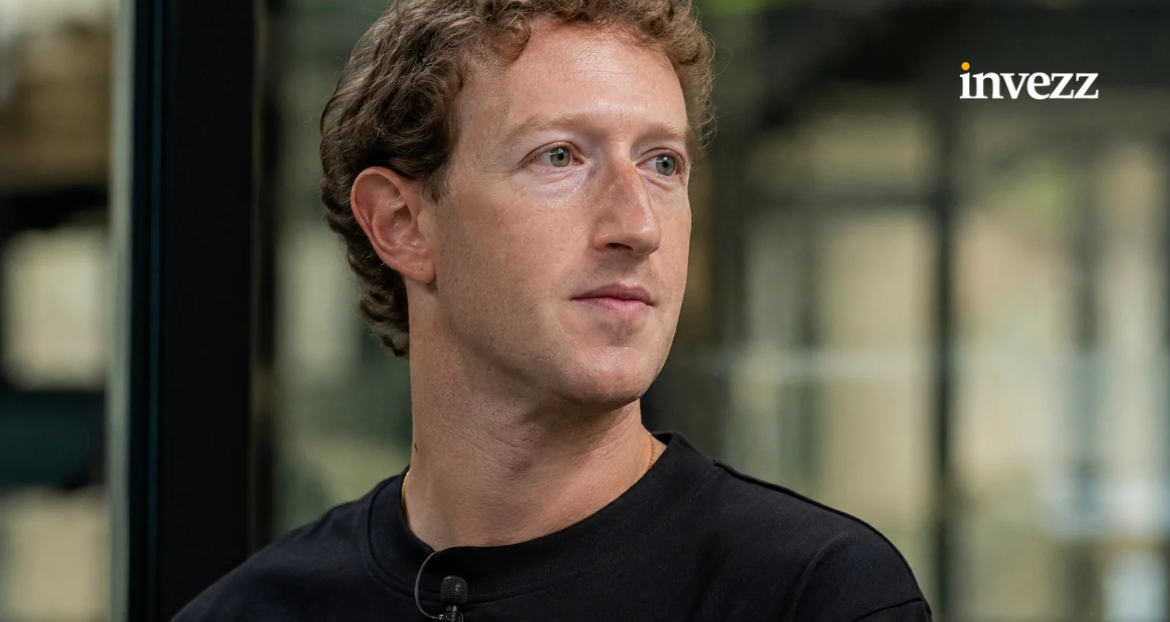
Mark Zuckerberg: industry’s last standing faithful billionaire
For years, Wall Street has obsessed over key-man risk, AI moats, gross margins, and whether a stock deserves 20 times earnings or 50.
Yet one factor continues to escape most analysts’ models: billionaire behavior.
Perhaps it is time to add a new metric. Call it the “Fidelity Premium”.
In the aftermath of Nvidia co-founder and CEO Jensen Huang’s stunning resignation following revelations about extramarital affairs, investors have been reminded that even trillion-dollar companies can be vulnerable to very human weaknesses.
Huang stepped down on Nov. 12 after mounting pressure from a scandal that evolved from a personal matter into a corporate governance and national security headache.
And as Silicon Valley once again learns that there is no semiconductor capable of processing bad judgment, one billionaire stands increasingly alone:
Mark Zuckerberg.
The Meta Platforms founder may not be everyone’s favorite tech titan.
He has been accused of many things over the years: building addictive social platforms, spending tens of billions on the metaverse, wearing the same gray T-shirt too often, and recently developing an unexpected fascination with MMA and gold chains.
But unlike many of his billionaire peers, Zuckerberg has somehow avoided becoming a regular character in the world’s longest-running reality show: Rich Men Behaving Recklessly.
The billionaire affair index
Let’s be honest. The corporate world has compiled a remarkable collection of cautionary tales.
Amazon founder Jeff Bezos saw his private life become global front-page news in 2019 following revelations about a relationship with former television anchor Lauren Sánchez.
The episode ultimately coincided with the end of his 25-year marriage and generated enough headlines to power several digital publishing companies for years.
Microsoft co-founder Bill Gates spent decades cultivating the image of software’s wise grandfather before revelations emerged regarding personal relationships and workplace interactions that later became subjects of intense public scrutiny.
Rupert Murdoch turned marriage into something resembling a recurring subscription service.
The media mogul has accumulated enough engagements, marriages, divorces, and headline-grabbing romances to rival the output of his own tabloids.
Elon Musk, meanwhile, operates in an entirely separate category.
Most CEOs manage production lines. Musk seems to manage a constantly expanding cinematic universe of relationships, breakups, high-profile romances, and paternity headlines.
Trying to track Tesla deliveries is easier than tracking Musk’s dating history.
Then came Jensen Huang.
For years, Huang appeared to be the anti-Silicon Valley celebrity CEO.
While contemporaries cultivated personal brands, Huang cultivated GPUs. While others sought headlines, he sought computational throughput.
That image shattered spectacularly this month.
The resulting fallout erased hundreds of billions in Nvidia market value and ultimately led to his departure from the company he founded in 1993.
Investors who once worried about AI competition suddenly found themselves discussing relationship decisions.
Which brings us back to Zuckerberg.
The strange superpower nobody talks about
In Silicon Valley, building a trillion-dollar company is impressive. Remaining married while doing it may be even harder.
Zuckerberg and Priscilla Chan have been together since meeting at Harvard in the early 2000s.
Through Facebook’s dorm-room origins, IPO chaos, congressional hearings, metaverse skepticism, artificial intelligence wars, and repeated predictions that Meta was doomed, the couple has remained remarkably stable.
This is not normally the kind of thing investors emphasize during earnings calls. Perhaps they should.
Corporate governance experts frequently discuss succession planning, board independence, and executive oversight.
Yet history repeatedly demonstrates that personal scandals can destroy shareholder value far faster than disappointing guidance.
An earnings miss can be fixed next quarter.
A front-page scandal involving the CEO often requires lawyers, crisis consultants, emergency board meetings, and several uncomfortable interviews with journalists.
The hidden valuation multiple
Imagine two otherwise identical companies.
Both grow revenue 20%.
Both dominate their industries.
Both generate mountains of cash.
The first company is led by a CEO whose personal life resembles a Netflix docuseries titled Three Relationships and a Yacht.
The second is led by someone who spends Friday night at home with their spouse.
Which deserves the higher multiple? Wall Street rarely asks the question directly. But recent events suggest perhaps it should.
The lesson from Nvidia’s crisis is not really about romance.
It is about concentration risk. When a company’s identity becomes inseparable from its founder, every aspect of that founder’s decision-making becomes a corporate variable.
In other words, character becomes an asset class.
The last faithful billionaire standing?
Of course, declaring Zuckerberg the world’s last faithful billionaire is intentionally tongue-in-cheek.
There are undoubtedly other wealthy executives living perfectly ordinary family lives far away from headlines.
The joke works because billionaire culture has spent years convincing the public that extraordinary business success inevitably comes bundled with extraordinary personal chaos.
Zuckerberg has quietly challenged that assumption.
He may be spending billions on AI infrastructure.
He may be racing OpenAI, Microsoft, Google, and whoever launches the next foundation model next week.
He may still be explaining the metaverse to skeptical investors.
But amid a tech industry that increasingly resembles a crossover between Succession, The Wolf of Wall Street, and celebrity gossip magazines, Zuckerberg’s most underrated achievement may be startlingly simple:
He keeps showing up to the same wife.
For shareholders exhausted by scandal-driven volatility, that might be the strongest moat of all.
Or, to put it in Wall Street terms:
Meta’s relationship fundamentals remain firmly investment grade.
AI disclosure: AI tools assisted with research and drafting of this piece. An Invezz editor reviewed the facts, sources and wording before publication. Any opinions or analysis are Invezz’s, not those of an automated system.
The post Mark Zuckerberg: industry's last standing faithful billionaire appeared first on Invezz